WHY IS AIRLESS STILL CONQUERING THE BEAUTY INDUSTRY?
by ROSA PORRAS MANSILLA
In cosmetics, some packaging formats appear, set a trend and disappear. Others stand the test of time because they respond to the changing needs of brands and consumers.
Airless is clearly one of them.
Its success has much to do with its functionality.
Compared with other packaging systems, airless helps protect the formula from exposure to air and reduce the risk of contamination during use. It also offers precise dosing and a convenient and clean application experience.
But its continued relevance cannot be explained by technical performance alone.
Cosmetic packaging has changed, and so has the role of the pack.
And this is where airless has demonstrated its ability to reinvent itself.
New developments allow for different materials, finishes and customisation options, while also advancing towards more responsible solutions, such as recycled materials, monomaterial structures and refill systems that extend the life of the pack.
In other words, airless remains a classic format, but it is no longer the same airless we knew a few years ago.
Consumer perception has also evolved. Weight, feel, ergonomics and the quality of the mechanism all contribute to the product experience and, particularly in premium beauty, can be as important as the outer design itself.
That is why innovation in airless today is about finding the right balance between technology, protection, aesthetics, experience and responsibility.
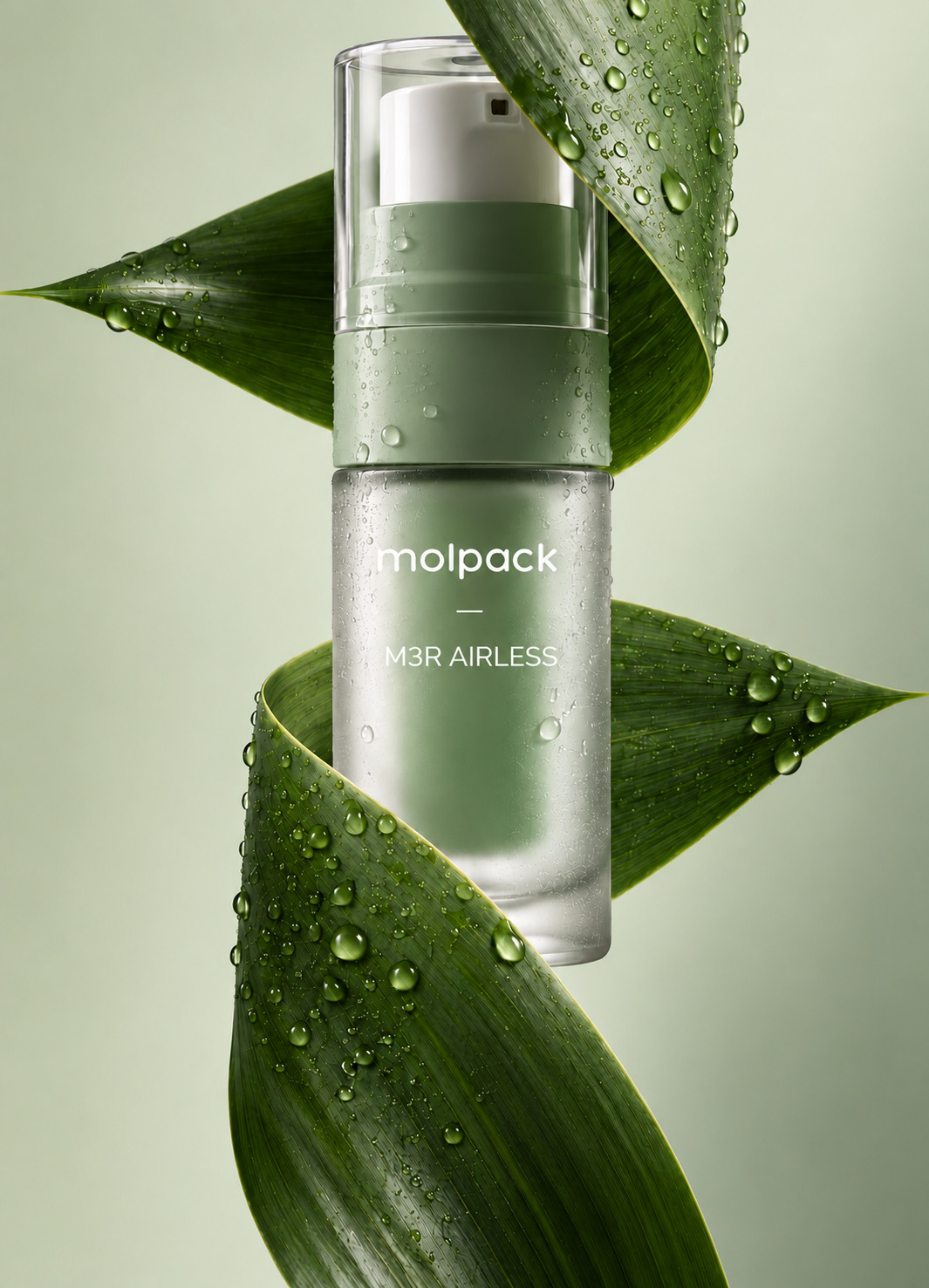
A good example of this evolution is Molpack’s M3R Airless.
The concept starts with a very current question: how can we preserve everything that makes airless so attractive while responding to the new demands of brands and consumers?
M3R Airless embraces glass, a material highly valued in beauty and particularly appreciated for premium products and delicate cosmetic formulations.
Its design features a moulded glass bottle with added weight in the base, reinforcing the sense of quality, solidity and premium appeal associated with high-end packaging.
But the innovation is also inside.
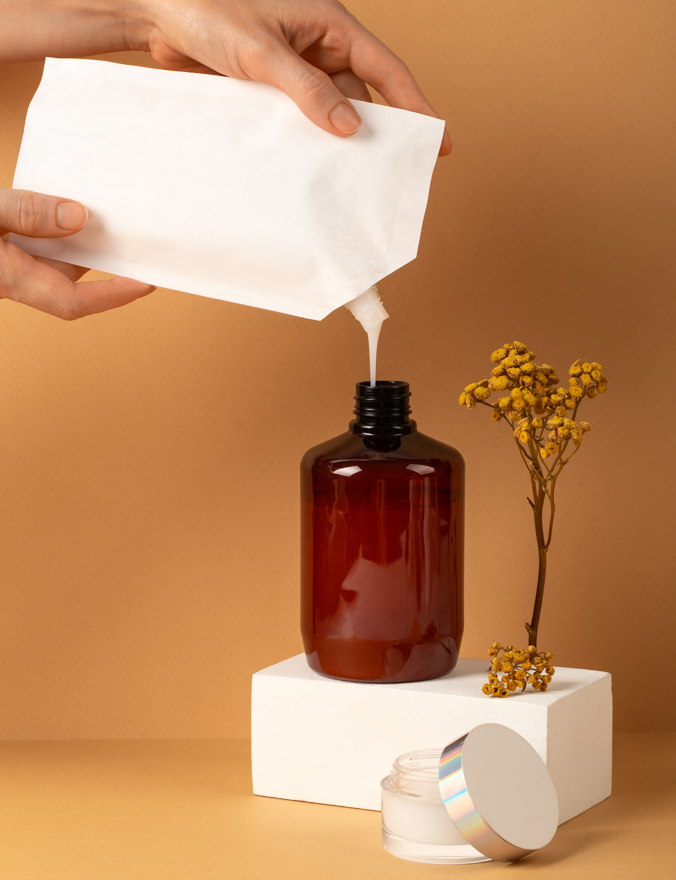
The pack incorporates a refill system designed to extend the life of the outer container. The pouch, together with the cap, collar, engine and actuator, is made from PP, enabling a final 100% monomaterial, recyclable and recycled solution.
With this approach, refill becomes more than a sustainability statement. It becomes an integrated part of the product experience.
And perhaps this is precisely the key to the evolution of airless: it is not about changing a format that already works, but about making it evolve so that it continues to make sense in the future.
Because in cosmetic packaging, innovation does not always mean starting from scratch. Sometimes, it means looking again at a familiar format, understanding how needs have changed, and finding new answers.
Airless has been doing exactly that for years.
And everything suggests that it still has not said its last