Categoría: Concepts and trends

  • How can new technologies improve beauty packaging experience

    How can new technologies improve beauty packaging experience

    Technology is moving forward at great speed in all sectors and of course, in the packaging sector we can also perceive innovation and evolution into a more digital market in order to adapt and evolve to the 4.0 industry. 

    This new stage, packaging includes elements known as smart packaging. Packaging is a key element since it is the first contact that a client has with a product, it’s the products’ image. This is the reason why it is so important to find new ways to connect with the customer through our package and these new ways are smart packaging. 

    Which types of technologies are the most common?

    Smart packaging means not only protecting the product but also providing valuable information for the customer that can be addressed to the distributor and the consumer. 

    Types of applications

    There are different types of smart packaging and every one has different applications:

    Design type: This smart packaging is thought to improve its shape and functionality, that is why the consumer perceives an added value and improves his experience when he uses it. An example in the cosmetic packaging are dosing tubes. 

    Active type: The main goal is to use better materials to improve the appearance or functionality of the product. It can be used to control the temperature or prevent moisture from impacting inside the package. 

    Connected type: This smart packaging uses technology such as sensors or codes in order to generate data and save, treat and analyze the consumers’ behavior. This type of packaging is capable of varying depending on the type of customer that is exposed to. This information can be used to improve the distribution of a product or locate a package. 

    Types of objectives 

    Based on these three types of smart packaging, there is also a classification depending on the objectives of a brand or the necessity that needs to be fulfilled by the customer. 

    Stock and life cycle

    Tracking: you can know in real-time where your package is. For B2B companies this is an extremely important objective since trakking a product when it is part of a large supply chain is key to analyse possible problems and optimize processes. 

    Agility: the data permits to optimize the supply chain

    Sustainability: By controlling the life cycle of a packaging, you can reduce your carbon footprint impact and also track how and where it is being reused. 

    Integrity of the product

    Authenticity: to ensure that the product that the client receives is correct, and proceeds from the correct supplier in order to avoid fake products. 

    Security: to protect the product from robbery and control that there haven’t been any inadequate uses. it is being used in a proper way. 

    Quality: to guarantee that the product is in optimal conditions. 

    User experience

    Interaction and satisfaction: communication with the consumer for a much deeper interaction such as entertainment, instructing or informing. 

    Use: simplifying and optimizing the delivery and preparation processes and understanding human behavior through technology. 

    Acces: Improve the command process of products and also the delivery. 

    Which are the challenges of these technologies?

    Although smart packaging is increasing in the packaging sector, it isn’t yet a priority for the majority of companies in the packaging industry. There is still a long journey until it becomes a must for companies since there are some challenges that need to be overcome. 

    Commercial challenges: better packaging also means a higher cost. In a saturated market such as packaging, rising prices can impact negatively on sales, but keeping the same prices and cutting benefits isn’t a good solution either since it isn’t cost-efficient. 

    Legal changes: the regulation of smart packaging isn’t clear or fully developed. As a consequence, aspects such as consumer data collection and manipulation by companies can be conflictive in the future. 

    Technological challenges: If smart packaging depends on technology this means that it will advance at the same speed as technology. Therefore, the better technology gets, the better will the packaging be. 

    Organizational challenges: smart packaging involves different organizations such as the main company, the delivery companies, the QR developers, the client… therefore there needs to be a perfect process that takes into account how these different agents work in order to create a successful smart packaging. 

    Conclusion: Smart packaging is around the corner

    Smart packaging is a powerful tool that will help us provide a better service by answering questions such as “Where is my package at this very moment?”, “In which temperature conditions is my package during the distribution process?” By knowing this information we will be able to improve our supply chain processes and therefore improve the value perceived by our client. 

    According to Smart Packaging Market Research Report – Forecast to 2023, developed by Market Research Future, the global market value of smart packaging is 46.000 million dollars. 

    Currently there are 11 multinational companies that are working intensively in this field. In a few years, packaging will overcome it’s protective mission and will transform into “super-packaging” with the mision to build a personalized and valuable experience for the consumer. Not only a product experience but also a shopping and brand experience: packages will help the customer make a purchasing-decision and even give the company feedback about the use, satisfaction and opinions of the product. Smart packaging will provide very valuable insights for companies to create real-time analytics. Packaging will create, strengthen and improve the collaboration and relation between all stakeholders. Therefore, it is important to take in mind how we are going to overcome some of the main challenges of smart packaging. 

    All in all, smart packaging is an unstoppable trend that will revolutionize different sectors apart from packaging. It is a double revolution: on the one hand it improves the user experience (active packaging) and on the other hand it has a positive impact on the supply chain (intelligent packaging).

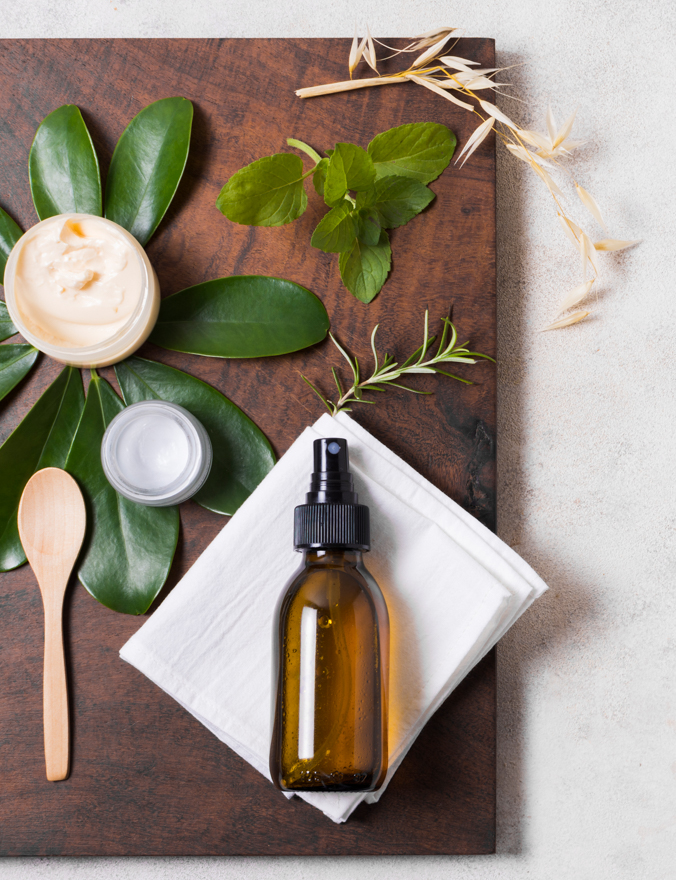
  • Organic and natural cosmetic products are becoming increasingly popular among French women.

    Organic and natural cosmetic products are becoming increasingly popular among French women.

    Women all across the world did not wait for the pandemic to begin using organic or natural cosmetics in their beauty routines, but the health crisis has clearly hastened this change. According to a new survey, practically all French women aged 18 to 50 have tried this product category, whether to safeguard their health or the environment. The vast majority of purchases are done in mass-market stores.

    Organic and natural cosmetics are becoming increasingly popular among French women, who find them reassuring. The Slow Cosmétique Label, in collaboration with market research firm Harris Interactive [1], assesses the situation, with the end result demonstrating the popularity of natural formulations among female customers aged 18 to 50. 

    As a result, nearly nine out of ten French women (92%) buy natural or organic cosmetics at least once a year, and nearly six out of ten buy them every three months.

    The major reason for purchasing is to improve one’s health. 

    The survey also reveals that, at least in the beginning, environmental concerns are not what drives French women to purchase organic or natural cosmetics. Indeed, over half of respondents (47%) think their own health is the most important reason for purchasing these cosmetics; environmental protection follows in second, although only 17 percent of women mention it.

    Furthermore, while the pandemic has improved sales and interest in locally created items in local retail, it appears that this is not the case (yet) in the cosmetics industry. Local production and/or manufactured in France labels are just a source of inspiration for 8% of respondents when purchasing cosmetic items. This might be explained by the French industry’s dominant position in the industry. As a result, French-made product brands are extensively available on shelves, which is a significant departure from many other market areas.

    Cosmétique lente? 

    The Slow Cosmetique seal, in addition to being organic and natural, appears to pique the curiosity of French ladies. The Slow Cosmétique Association, based in France, awards the seal to brands that promote responsible natural skincare, with formulas that are free of controversial ingredients in terms of health or environmental impact, as well as marketing that is equally healthy, without greenwashing or outlandish promises. Eight out of ten French women think a seal like this is fascinating, and 92% think it will help the cosmetics business go forward in the correct manner. It boosts the product’s confidence for approximately nine out of 10 women (88%). The Slow Cosmétique seal has been given to 313 brands thus far.

    Cosmetics, skincare, and fragrances come in a variety of colors, textures, and scents. 

    In terms of exports, the make-up, skincare, and perfume sectors are the most active. They account for 86.2 percent of total French cosmetics export sales. 

    Perfumery, which accounts for 30.6 percent of French cosmetic exports, saw the greatest increase in 2021: +35.4 percent over the previous year.

    Make-up and skincare contribute for €9 billion in exports, or 55.6 percent of total exports. Skincare items are the most popular (€7.5 billion), followed by lipsticks and eye make-up. 

    These data, according to the French trade group for cosmetic producers (FEBEA), reinforce France’s position as the world leader in cosmetics, a country whose know-how is recognized worldwide.

    «The cosmetics business is demonstrating its amazing capacity to recover from the health crisis,» says FEBEA Delegate-General Emmanuel Guichard. «It took advantage of the market’s recovery, but it also innovated to satisfy new customer demands. Companies of all sizes contribute to these strong export results, including huge corporations as well as a slew of tiny businesses that, owing to their energy, are also supporters of the Made in France logo. Demand for more natural and ecologically friendly products has surged since the crisis began. The industry can do so well over the world because it satisfies these expectations and spends extensively in R&D.» 

    The cosmetics business employs around 160,000 people in France, according to the FEBEA.

  • How to engage customers with sustainability

    How to engage customers with sustainability

    One of the challenges of sustainability is how to engage the consumer into the process. For example, if we develop products that are recyclable but consumers don’t recycle it, we have got a broken system since it’s not circular. The main issue is that the consumer’s common thought is “sustainability is not my problem, it’s the brands’ problem”.Therefore it is important to get consumers to buy these new sustainable processes apart from the product. So, how can we trace this behaviour and engage the customer to be part of the sustainable process?

    From a capitalistic perspective, designers actually created the consumer throw-away society: they made it exciting to throw away things through aesthetics and usability. So design has the power and responsibility to replace our throwaway consumer culture with new behaviours and lifestyles that match our best intentions and shape a better future for us all. 

    Creating a sustainable brand through packaging

    61% of consumers say that they’re likely to switch to a brand that is more environmentally friendly than their current brand. But how do they connect to the correct brands? Right now everyone is communicating sustainability the same way: using color green, the same eco-labels, arrows… So there is so much noise that the consumer is confused and it is very difficult to stand out. If we want to create a different brand and attract more customers, we have to appeal to people’s human nature. 

    Human biases is the theory that studies human behaviour and it has to be a roadmap for designers to see how we can connect to human biases to make a difference with our design. If we apply human biases to design we can point out these main aspects to take into account:

    EASY: Designing the path of least resistance by reducing complexity and making effortless products. 

    ATTRACTIVE: Designing enhanced value through improved utility, experience and aesthetic. It often includes personalisation. 

    SOCIAL: Design to build community, new social norms and positive peer pressure that encourage group commitments.

    TIMELY: Designing products, activations and communications to prompt people when they are likely to be receptive and maximising immediate benefits. For example, designing packaging for masks during the COVID19. 

    Using gamification to connect with our customers

    Although coffee cups are a very useful design; easy to apply, no cleaning needed, cheap… 2.5b coffee cups are binned each year in the UK! This is an unsustainable amount of packaging. To solve this problem, CupClub created a social campaign to recycle these cups. They engaged with the consumer through visual and colorful communication in the streets of London. So they applied three of the main aspects of human bias: EASY, ATTRACTIVE and SOCIAL. They have created a strong identity and changed consumer behaviors. 

    What do you need to take into account to design sustainable packaging?

    It is important to know the human thoughts and perceptions before designing new sustainable solutions and creating our brand identity. Here are some of the key aspects you must know before choosing your ideal design: 

    The power of value perception: usually big packages are associated with more quantity and therefore if we use a smaller package though it contains the same, we have to communicate it. 

    Accepting small steps: if we are moving to RPET we need to reframe it to the consumer and let him know that it will take long to implement material changes in products. For example, LEGO wanted to move to bioplastics for their pieces so as a start they made a clever move and only changed their natural figures like forests, and created a proper storytelling about how nature is made of bioplastics. 

    The danger of nature: Consumers have an image of how natural looks (usually represented with brown and green colors). There is an issue on how we automatically go for a design that looks natural but often the solution is something technical.

    Rivers of thought: When we want to design something new, we have to take into account the social learnings and deep thoughts of consumers. For example, if we create a package to be used for the toilet we can’t also sell it to be used for the kitchen because it is against consumers normal perception of use, and therefore, it is likely to be rejected. 

    The consequences of durable: we think about durable packaging as something that the consumer can keep and can become ownable and precious. But also we have to think that products will wear and a challenge for designers is how we design things that last and are at the same time appealing (an opposite thing of what we have been teaching and selling at the moment). 

    The right tone: the way we talk to consumers is key in behavior changing. If we talk in an imperative way like “You have to recycle” the reaction will be negative and they will automatically think “Who are you to tell me what to do?” They have to feel involved with the brand to feel engaged. It’s good to use humor and more informal language. 

    Using all senses: we have a lot of senses to play with so why not use them? A good example is how toothpaste brands use flavour to encourage the user to brush their teeth at least twice a day. If we didn’t get that mint fresh sensation, we probably wouldn’t wash our teeth everyday. Our sensorial feedback is really powerful to engage with a product. 

    All in all, if we start with a sustainable win with consumers, you will have a sustainable win for your company. And not only from an ethical point of view, but also a sustainable one:

    UNILEVER says that in 2018 sustainable brands grew 69% faster than the rest of business and delivered 75% of unilever’s turnover growth.

  • How can packaging affect your brand image?

    How can packaging affect your brand image?

    In this post you will discover the 4 value pillars of cosmetics packaging and the importance of the role they play in the satisfaction of the end consumer. 

    The importance of function

    What are the primary functions? To contain and protect the product, ensure the correct usability for consumers and finally logistics, to search for efficiency when transported and displayed. 

    Containing and protecting your product well is the fundamental function, because if this fails, the product fails. For this reason the first question before choosing a package is what is your product? 

    For example, do you have a 100% formulation that is preservative free?  Does your product use active ingredients or things that can be quite aggressive? In this case tubes are most recommended. Another example: Is your formulation 100% oil based? You will likely require an oil specific pack to prevent liquids from dip tube creeping.

    The next function is delivering consumption convenience to your customer. Of course with each customer that has different habits in terms of what they use and consume in cosmetic products, it is very important to first ask the question of “Who is our consumer and how do they engage with our product?” For these types of definitions it is useful to ask ourselves:

    In which environment does the consumer use our product? If it’s in the shower this will require a much easy-to-use packaging and closure so they don’t drop the product. 

    Are they time poor? Packaging can make on-the-go storage much easier when chosen right. 

    Are they frequent users with a range of products? For example, it wouldn’t make sense to use a face mask with consumers that are not familiar with them. 

    There is now a trend with consumer usability and creative applicators such as rollers INSERT FOTO MOLPACK or dropper systems that improve application of the product. A great example of this is Molpacks’ powder brush or Molpacks’ Click pen. 

    Taking into account logistics

    The final aspect is logistics, so before the product is sold it will be shipped, stored and displayed and in this process the product must be properly protected since it represents a large part of the products’ life cycle. An important consideration is how you can design packaging so you realize cost savings and efficiencies.  For instance, heavy materials like glass will be more expensive than light weight materials. Also, some packages might be difficult for cosmetics to fill, if it is the case, there can be extra costs since the filler might need to develop a technology to automate the process. 

    Another important aspect to take into account when choosing a package is the empty space that its shape has and can’t be filled with another package on a ship or display shelf. This is very expensive because when there are thousands of units of space that can not be filled and that is a lot of extra space that you pay for. 

    Message transmission through your pack

    A package is the first contact between a brand and a consumer. Packaging has also the mission to transmit the messages of a brand to the consumer. Importantly it is highly likely that packaging is the first impression that a consumer has of your brand or product. Whenever an individual comes across your product, your packaging is one of the very first things they see, therefore, the question to ask ourselves is: What should your packaging say on your behalf?

    Within message transmission, the packaging has two objectives: inform and communicate about the product it is containing and transmit at the same time the brand identity and aesthetics. 

    Informing and educating is about providing customers the right and accurate information they need to make a purchase decision. In the cosmetics sector the main information required by the consumer is:

    brand name

    Product name

    Key ingredient

    Primary benefits

    Volume

    Manufacturing location 

    If you have a brand that has a minimal style, it is easy to get overwhelmed by all the info that a packaging must contain and how to make it adequate to a minimalistic aesthetic. The good part is that you can combine your primary packaging with secondary packaging to transmit all the information that your customer may need so you can create your desired brand image and still fulfill the customers expectations. 

    This is about correctly introducing brand codes and aesthetics so that your packaging serves as an extension of your identity and achieve brand recognition and finally differentiate from the competence. 

    How can we integrate a brand code to a packaging? An excellent example is Thalgo, the french cosmetic brand inspired by nature that uses  a clean design and blue sky as its identity. The packaging design represents its natural values through round shapes and colors in their image and also in their product: they use key ingredients such as sea water and other marine substances.

    Packaging is also an opportunity to present your brand as a tangible object, if we reflect on the many ways a brand can communicate a story, the majority of ways are visuals or audio. Nevertheless, packaging can permit a customer to hold a brand. 

    As a consequence of good brand codes applied to packaging, there is brand recognition. This happens when a consumer, only by looking at packaging, can identify the brand that it belongs to. 

    The last aspect of branding and aesthetic is delivering a point of difference. The proportion of cosmetic sales online has been growing. Crucially, in the customer journey a products’ visual appearance becomes more important for the consumer when they cannot touch a product. So having a packaging design that is unique is even more powerful now.

  • Do you have a good brand storytelling?

    Do you have a good brand storytelling?

    Beauty categories have always been a great opportunity for packaging branding. The ability of brands to create product experiences is what matters. But how can we connect to nowadays customers? What has changed?

    Brands are craving for stories and the designers’ job it to sublinate the brands world and address the customers’ expectations. 

    Analysing the customers’ evolution of mindset

    We cannot think of design without talking about the evolution of the customers’ behavior. 

    In beauty, the customer has shifted from conceiving beauty as an idealistic concept to diversity and consciousness that beauty is not only one dogma. We can see that all leading brands are conquering the digital native space promoting transparency with messages that talk about “taking care of oneself while making the world better” and avoiding animal testing or unsustainable practices. 

    Therefore, as designers, the goal is to catch the new consumers mindsets within holistic brand messages making sure they are taken in consideration in the packaging design. From a communication perspective, you can do short term and promise that you have nothing to hide or that you will change the world with your product… But you still need to stand out from the crowds onshelf. So in that sense, packaging is the best medium to connect brand and customer. 

    The role of packaging

    Packaging is the core instrument to transmit a brand’s identity: its present at the store, at social media and street campaigns, at customers homes… so it’s very important to guarantee that packaging delivers the story that the brand wants to tell. We have to think of design as what enables us to create a mental imprint to generate sales. 

    Moreover, design has the power to concentrate full messages into one device. It’s not only a matter of style, but you need to get further in the story you want to tell so the consumer can get a universal understanding of the brand. 

    Best stories around packaging

    Nature as a storyteller

    Using nature resources like water, flowers… helps the customer to associate a product with nature and transform it into a ritual. For example, water is energising, a flower is blooming, the bee is harvesting. And then you can translate it into a skin benefit: moisturize thanks to the water or have a resplendent skin thanks to the blooming properties of flowers. The last step will be to translate this into a design language like using blue colors, splashes in the design…

    A good example of a brand that uses nature to position its brand is Abeille Royale, they have built a story of a bee that extracts from the honey properties to create a super protective anti-aging cream through the alveolar system that explains the ritual. 

    As we can see, it’s all about the universal language and creating a communication that can connect with everyone’s rivers of thought. 

    Going back to the origin

    How do we create a traditional story?

    An example of a brand that uses origin as its story is a fragrance that was created based on the scent of the first parisian shop. In this case, the product ideation was a perfect fit with the traditional storytelling value. From the packaging perspective, the designers expressed the traditionality through a perfume cap with a printed number on top. All of these stories were represented in an aesthetic way to attract the customer. 

    Key tips for your stories

    Integrate sustainability at a core brand message

    How can we integrate sustainability?

    Before it was trendy to put sustainability in briefs 

    Create an emotional connection with consumers

    We are living in a very competitive market and we need to find new entries to the categories. Through packaging we can connect in a strong and an emotional way. For example if you put packaging as a star medium and use transmedia campaigns to create interactive stories with your customer, it is more likely that you gain engagement with your customer and build a better relation with them. 

    Reusability of the packaging

    Unfortunately, sustainability cannot always be achieved that is why sometimes we have to be creative and think about how we could give a second life to our package and inspire the consumer.  For example, there is a champagne company that transformed its packaging into an ice-bucket. This way it is not only a value for sustainability but also for usability. The packaging can have second lives and be part of the product ritual. 

    It can also create a product experience, the spirit company Hennessy, created a shaker that was included with the bottle and Veuve Cjicquot had a special packaging that reflected the storytelling of the brand: the use of a mailbox to pay tribute to the origin of the brand (how the brand wrote letters to clients). 

    All in all, we cannot talk about packaging without mentioning sustainability. We want to sustain the world we live in by making things smarter, safer and better but for this to be possible we need to question our ability to invest in innovation, time and money. So, in the end we need to work a lot and work together (marketing, production and creation) to build strong brands and make sure we make things the right way. 

    If designing an original idea has the power to federate across a shared mental imprint, then design is the best currency to set a dialogue between the brand world and cultural anchorages. The aim of design is to make sure that stories tease curiosity and complicity.

  • Powder cosmetics: the business adjusts to the growing market

    Powder cosmetics: the business adjusts to the growing market

    Anhydrous powder products are gaining traction in the beauty sector, following in the footsteps of solid cosmetics. New brands have emerged with a diverse range of products, developed in close partnership with manufacturers who have adapted existing industrial tools to meet this new need. 

    The need for a «zero waste» bathroom free of liquid hygiene items in cumbersome packaging, the majority of which is made of plastic, is now being met with a growing powder offering.

    Various solutions have emerged, including loose or compact powders that can be rehydrated in a bottle (900.care, Juliette) to rehydrate a liquid product and keep it fresh, or loose powders that can be used directly with water, such as the Perlucine range, Yodi shampoos and cleansers, or Laboté face care masks in single-dose plant-derived capsules. 

    All of these solutions are accompanied by a novel, simple, and practical gesture aimed at customers who want to lower their carbon footprints while maintaining the quality and sensitivities of the items they use on a daily basis.

    All options are acceptable. 

    In this context, the most recent releases appear to emphasize a preference for powders in their loose form. «When compared to compact forms, loose powder has the benefit of skipping a shaping step and dissolving more easily and rapidly in water a priori when the product is reconstituted.» However, preservatives are required since it is meant to be diluted into a liquid hygiene solution that can be stored,» explains Stéphanie Reymond, founder and director of Squarexpert, a technical and commercial consulting firm specializing in cosmetics. This limitation can be circumvented by using the loose version, which will be diluted each time it is used.

    The fresh new JU shower gels are among the most recent additions. They arrive in the toilet as powder packs to be diluted, scented with cotton flower, orange blossom, vanilla, or almond. The initial order includes a safe glass-based pump container as well as three 25-gram powder packets containing various scents that, when diluted in tap water, are used to reconstitute a liquid shower gel that may be preserved. The highly fluid powder may be blended simply to create a solution that is suitable for the entire family.

    The dosages are supplied in a simple envelope and may be preserved for up to three years because they are partially wrapped in a light recyclable plastic film. «We decided to get things started by producing a shower gel, which typically includes 90% water,» says the company. «JU only preserves the remaining 10% of actives in the form of powder, which is made up of 99 percent natural chemicals,» adds Karline Hamain, Juliette’s creator. 

    The firm plans to produce a full hygiene collection for adults and children in the future, including toothpaste built with the same principle and provided in the shape of an 8-gram powder pack to hydrate in an adapted pump-bottle, starting in February.

    «On the market, there are still a few niche players.» «Both formulation and packaging are highly complex,» the brand’s creator admits.

    Increasing the industrial phase’s effectiveness 

    Powder product production, as Stéphanie Reymond points out, still has some limitations. 

    «The range of solid surfactants in terms of formulation is still fairly restricted,» she explains, «particularly when you want to fulfill naturalness, Cosmos, and skin tolerance criteria.» «Packaging is a challenge in terms of productivity. Due to the volatile nature of powder, there are hazards associated with handling this type of ingredient: some mixes are explosive, and there is a risk of inhalation and skin contact… «It’s best to avoid all of this,» she continues.

    Step One, a brand created in 2019 in Aurillac, central France, sprang out of their technological abilities: in 2017, they filed their first patent for their production technique. Shower gels/cleansing gels for body and hair, face and hands, and shampoos, all in the form of powders to dilute in a container, and refills in biodegradable PLA paper packets are now available. The firm exports a lot, especially to Nordic countries, and in January 2022, they released the first powder deodorant that could be reconstituted (6 g) in a 50-ml roll-on bottle with a reusable glass ball.

    «We were the first to identify a formulation + manufacturing complicated. «Tailor-made items based on our technology are in high demand right now,» says Hélose Fontaine, the company’s creator. 

    To meet this demand, the laboratory is considering a more significant industrialization phase, with the help of ADEME, the French Agency for Ecological Transition (the company won the EETE request for proposals as part of the France Relance state recovery program, demonstrating their commitment to sustainability). «The objective is to be able to provide significant accounts,» the entrepreneur explains, «since they are increasingly interested in our strategy.»

    Lessonia, a maker of ingredients and cosmetics who has specialized in powders from the company’s inception, decided to enhance their industrial tool by obtaining a powder cosmetics packaging machine. 

    «Powder products need industrial equipment and expertise, which not all cosmetics enterprises possess. The concerns are different; there are issues with mixes, grain size, density, and extensive wear… In terms of packaging, a powder injector is not the same as a liquid injector, according to Innovation Director Charles-Henri Morice.

    In addition, the Director mentions legislative limits that are now unsuitable for this emerging market and its unique peculiarities. «Can the powder or the reconstituted product be called the final product?» he wonders. «Because the product has been altered, it has become more complicated, and we are dealing with a regulatory vacuum.» Take preservatives, for example: they must be present in appropriate quantities in the completed reconstituted product, but there is a limit in the dry product that must not be exceeded under the European Cosmetics Regulation. So we need to figure out what fraction of powder to use in the reconstituted product,» Charles-Henri Morice says.

  • Olfactory reformulation, the key for creating everlasting fragrances.

    Olfactory reformulation, the key for creating everlasting fragrances.

    Changes in IFRA laws and directives, resource depletion or growth, production halts… All of this changes the perfumer’s palette by restricting or prohibiting the use of specific components. Reformulation has become a common technique for fragrances that have become classics – those that have stood the test of time. When attempting to resurrect an old brand or a legendary scent, this type of skilled labor is also required. When the formulas are no longer available, it is sometimes done from scratch. 

    The perfumer’s profession entails a lot of reformulation. The fundamental reason for this is the necessity to adjust perfumes to changing raw material availability.

    Recent fragrances, on the other hand, provide a hurdle because they must also adhere to IFRA guidelines. «For example, Jean-Claude Ellena, Michel Almairac, and Maurice Roucel’s brief, understandable formulations, in which each element has its own position, need refined, extremely accurate substitution work.» The crucial period of evaporation on the skin need a great deal of care and ingenuity. 

    Old brands make a comeback 

    Another challenge is the re-creation of historical scents without the use of archives. The resurgence of ancient companies (such as Teo Cabanel, Jovoy, Houbigant, Lubin, Le Galion, or, more recently, Marcelle Dormoy, Maison Violet, Cherigan, Bienaimé) accelerated this trend, but some were able to maintain their documentation.

    Cinquième Sens attempted to take up this task recently. «We had to recompose a 1930s scent based on a sample from the 1950s, but we didn’t have the original recipe,» perfumer Alice Dattée says. Even if chromatography is a valuable tool, it is insufficient. «The sample was ancient,» she adds, «and the high notes had vanished.» 

    Harmonizing inventive middle and back notes is a hard balancing act. This long-term project incorporates olfactory studies, culture, and strategy. For the first time, the IFRA directives favored perfumers. «The coumarin assay would not have been feasible under IFRA 48, but IFRA 49 helped position the perfume as a mixed scent, allowing it to benefit from more flexible criteria.»

    According to Alice Dattée and Suzy Le Helley, the most challenging aspect of these ancient scents is recreating the nitrated musk impression with modern chemicals. Another big difficulty is the usage of natural components, which have become quite expensive, which may necessitate lowering their amount. «Then you have to come as near to the original’s essence as possible while being current,» Alice Dattée explains. 

    Patrice Revillard of Laboratoire Maelstrom says, «It’s virtually improvisation to reformulate vintage scents that have vanished.» The perfumer won Panouge’s challenge to replicate Jacques Fath’s L’Iris Gris (1947), a scent that has become legendary.

    «It was difficult to get as near to the original form as possible,» Patrice Revillard adds, «since this perfume is known based on historic versions that have altered and macerated through time.» He worked on the version held by L’Osmothèque in the absence of the original recipe and supplemented his olfactory study with well-preserved historic smells. 

    The most serious concern was the usage of the eugenol note, which is severely restricted by European Directives. Patrice Revillard explains, «That is why our formula is a little less spicy, less ‘eyelet’ than the original.» «Thanks to L’Iris Gris’s current writing style, we didn’t have to substitute notes like nitrated musks, liliales, or oak moss.»

    Rather than strictly duplicating the recipe, this illusionist work reinterprets the perfume. «We were fortunate to work with a limitless budget because natural fragrances at the time were quite expensive,» adds Patrice Revillard, who will soon face the difficulty of working with a more limited budget, as Panouge plans to release a more cheap version of L’Iris Gris.

  • By 2025, social media shopping might be worth $1.2 trillion.

    By 2025, social media shopping might be worth $1.2 trillion.

    In the near future, social network shopping is expected to be a particularly flourishing business. The global social commerce industry is predicted to rise 2.5 times in the next three years, to USD 1.2 trillion. It’s a tendency that’s becoming more common, and it’s mostly fueled by Generation Z. 

    According to an Accenture report titled Why Shopping Is Set for a Social Revolution, «social commerce» is estimated to be worth USD 1.2 trillion by 2025, compared to $492 billion in the present worldwide industry]. Shopping on social networks will increase «three times as quickly as traditional ecommerce,» according to Accenture. To put it another way, it’s a market with a lot of room for influencers.

    Millennials are the biggest social media spenders. 

    Generations Z and Y, in particular, are thought to be responsible for 62 percent of social media expenditure. Millennials are expected to spend $401 billion on social commerce, compared to $359 billion for Generation Z. With a projected $128 billion in spending by 2025, boomers are going to be less fond of this method of purchasing. Generation X, on the other hand, will account for 28% of the market, with $344 billion in social media purchases. 

    In the last year, 64% of social network members reported making a purchase on a platform, accounting for over two billion online buyers globally.

    «The epidemic demonstrated how much people rely on social platforms as the entry point for everything they do online, including news, entertainment, and conversation,» said Robin Murdoch, Accenture’s global Software & Platforms sector head. «The increasing amount of time we spend on social media demonstrates how important these platforms have become in our everyday lives. They’re changing the way people purchase and sell, opening up new options for platforms and brands in terms of user experiences and income streams «Added.

    In 2025, which goods will be the most popular on social media? 

    63% of online customers believe they are more inclined to buy from the same retailer again, demonstrating the value of loyalty even on social media. Consumers are most concerned about not being fully reimbursed and not being adequately protected, according to the report. According to Accenture, this was a concern highlighted in the early days of e-commerce. «Trust is a problem that will take time to address,» said Oliver Wright, the firm’s global Consumer Goods and Services lead. «But the sellers that focus on these areas will be better positioned to expand market share.»

    By 2025, the Accenture analysis predicts which purchases would be the most popular on social media. By 2025, fashion will be the key engine of growth, accounting for 18% of total social commerce. Electronics will come in second with 13% and home decorating will come in third with 7%. Accenture also claims that the sale of fresh food goods and snacks, almost entirely for the Chinese market, may reach 13%, and that the beauty industry would grow quickly in the next years. 

    For example, L’Oréal’s Professional Products Division recently announced a collaboration with Replika Software, a start-up, to integrate Replika’s turnkey social selling software throughout the brand’s network of partner hair salons.

  • Beauty in the UK in 2022 will be bold.

    Beauty in the UK in 2022 will be bold.

    The British retailer’s Beauty Bets report for 2021 forecasts customer trends for the coming year. Lockdown beauty practices have left behind at-home regimens that appear to be here to stay. 

    Consumers will continue to experiment with beauty during lockdowns, with a revived interest in bite-sized beauty. Advent calendars, gift boxes, and discovery packages will continue to be popular ways to try out new luxury brands and items before making a full-size purchase.

    The notion of a «fragrance wardrobe» is also gaining traction, with customers trying various scents based on their mood or layering them to create a unique aroma. Long-lasting EDPs are chosen over EDTs, opulent scented body sprays and hand care improve hygiene routines, and scented shower oils, shampoos, and mists are redefining personal care. 

    People are wearing bolder makeup looks in real life. Lips will be the highlight of makeup as a nod to the 1990s, with highly pigmented, matte lipsticks designed to resist mask wear and lipliners making a dramatic reappearance. To complement the look, they have light-catching complexions and fluffy-yet-defined brows. Consider Emily in Paris to get a sense of what I’m talking about.

    A new definition of «one for all» 

    Multi-purpose beauty is evolving. It ticks all the appropriate trend boxes, maximizing effectiveness while reducing packing. With amped-up active-based solutions that tackle several post-pandemic lifestyle-related skin issues in one go, skincare is the biggest seller in the beauty industry. Consumers aspire to bridge the gap between cosmetic and medicinal skincare in this sanitary era, looking for well-known basics like retinol, vitamin C, AHAs, BHAs, and hyaluronic acid to attain salon-level results. 

    Microbiome, the year’s buzzword, should attract even more devotees, while cosmetics and hair care formulae will be improved to provide various advantages. While beauty regimens may be reducing as a result of multi-use products, the at-home salon experience remains popular. The growing sales of LED light masks, face toning gadgets, and intelligent cleansers should benefit from this. 

    Meaningful beauty and well-being 

    Beauty regimens appear to be integrating into 24-hour wellbeing habits as well. Many customers have become more conscious of mental health issues, prompting them to educate themselves and seek out soothing essential oils and self-mixed aromatherapeutic blends for the day. Sales of Aveda ChakraTM 4 Balancing Mist, for example, have surged by 350 percent year on year at John Lewis. And it appears that the night is no longer a no-beauty zone, with sales of sleepscape items skyrocketing: aside from scented pillow mists, sales of silk pillowcases increased by +533% at the British department store. Collagen supplements are becoming increasingly popular as part of the natural beauty trend.

    Beauty with purpose, a well-identified post-pandemic tendency, is considered by John Lewis as a new fundamental. They envisage refillable products being the standard in the future, with brands like Ouai, Rituals, Charlotte Tilbury, Hourglass, Evolve, and Voltary already leading the way. Sustainably sourced ingredients, ethical formulae, and planet-first packaging will be key advantages for beauty products, not simply desirable.

  • The top aesthetic trends for 2022 range from waterless washing to wild swimming.

    The top aesthetic trends for 2022 range from waterless washing to wild swimming.

    According to market research firm WGSN, waterless washing, fermented beauty, and beauty eating will influence the beauty business in 2022 and beyond. 

    Usability and sustainability will be the focus of beauty products in 2022. «As customers continue to turn to environmentally minded practices and goods featuring waterless features and longer shelf lives, the top beauty trends for 2022 mirror larger social developments,» says Clare Varga, WGSN’s Head of Beauty. 

    Next year’s trends, according to WGSN’s worldwide team of experts, will include water-saving hygiene methods, fermented beauty, speedier cosmetic processes, and beauty snacking:

    Waterless Washing

    Waterless washing products save water, allowing one out of every ten people in the world to have access to clean drinking water. With early entrepreneurs creating Showerless Shampoo and no-water-needed shaving products, this trend is an extension of waterless beauty and bring your own water (BYOW) items. 

    Fermented Beauty

     A growing interest in kombucha for the skin stems from a need for powerful components that remain longer. Fermentation, which is driven by the K- and J-Beauty sectors, produces enzymes that break down molecules so they may better infiltrate the skin, releasing potent chemicals into the skin’s or hair’s structure. Fermentation also promotes the growth of helpful microorganisms that function as natural preservatives, such as lactic, organic, and acetic acids. These naturally occurring microorganisms extend the shelf life of formulae, making them appealing to both the environmentally conscious and the value-conscious customer.

    The two-minute make-up bag

     Consumers who want a healthy ‘no make-up appearance’ in a hurry will like the two-minute make-up bag. As customers adjust to a hybrid post-epidemic living, the two-minute make-up bag provides flexible and low-key cosmetic lifestyles that align with the convenience of fast, low-maintenance looks and methods used during the pandemic. New and smarter beauty techniques will be the focus of products, delivering greater results with less time, money, and commitment. 

    Beauty Snacking

    During lockdown, a new beauty craze emerged: the beauty snack. Micro beauty moments were implemented into consumers’ lives during the pandemic to break up the homeworking lifestyle or offer moments of joy, and are set to become a mainstay in 2022. Flash treatments and no-mess formulations are among the beauty snacks. Edible skincare in the form of sweets and health bars will debut in 2022, giving it a more literal connotation.

    Wild Bathing

     Customers will seek out the natural benefits of open water and outdoor baths in order to reconnect with nature. This practice is deep in history, with origins in various civilizations, indigenous communities, and traditional remedies across the world, such as Japanese onsen and Victorian bathing machines. Nature will be brought inside with bath and body products that mimic outdoor bathing. Natural soaps, substances, and materials, as well as items made from seaweed or seawater, will become more popular. 

    Coastal-Foraged Ingredients

     Seaweed extracts, kelp, sea fennel, and algae will become popular must-haves in skincare and personal care products. Coastal components will be prized for their capacity to soothe, hydrate, cleanse, heal, and transport. Local, seasonal, and wild-harvested foods that are good for their skin and the environment will appeal to customers.